Connected Care Dashboards Cut Triage Time by 61%
Results
Challenge
In chronic diabetes care, the healthcare journey is dangerously fragmented. Doctors prescribe medications during rushed 15-minute consultations, unaware of whether patients fill their prescriptions or how their vitals trend between visits. Frontline care coordinators drown in unstratified inbound alerts without clear escalation protocols. In-house pharmacy fulfillment teams struggle with manual verification and lack real-time prescriber communication. Meanwhile, insurance companies, the primary clients and investors funding this care, pay for expensive emergency room visits and hospitalizations without clear visibility into clinical returns or avoidable claims.
Insurance partners invest heavily in preventive health because keeping patients stable prevents life-threatening complications, turning catastrophic $14,000 emergency admissions into manageable, low-cost preventive care. When a patient with diabetes experiences severe hypoglycemia (<54 mg/dL), delayed intervention causes loss of consciousness, seizures, and intensive hospital stays. Conversely, poor medication adherence leads to uncontrolled hyperglycemia and chronic complications. Traditional electronic health records act as passive digital archives rather than active coordination hubs. We needed an integrated 4-dashboard ecosystem that connected doctors, pharmacists, care interventionists, and health insurers into a unified, proactive clinical loop.
Our key design question:
How might we design a connected 4-pillar healthcare ecosystem that keeps doctors, interventionists, pharmacists, and health insurers in sync, transforming fragmented chronic care into proactive, closed-loop clinical action while protecting patient privacy under standard healthcare compliance?
Success required harmonizing four distinct operational realities: physician clinical speed (evaluating disease progression and titrating therapy in under 30 seconds), interventionist triage urgency (resolving Level 5 emergencies within minutes), pharmacy fulfillment efficiency (verifying and shipping prescriptions with role-based privacy shields), and health plan actuarial rigor (validating HEDIS quality measures and claim savings to prove preventive care ROI).
Research
To understand provider workflows and operational bottlenecks across the care continuum, we conducted contextual field research across clinical, care coordination, pharmacy fulfillment, and health plan environments.
We completed 36 stakeholder sessions, 8 live shift shadowing hours, and a comprehensive workflow audit across 42 clinics, digital pharmacy fulfillment centers, and 3 regional healthcare networks.
Workshop
I facilitated a cross-functional alignment workshop bringing together clinical medical directors, pharmacy operations leads, software architects, and compliance officers to define the multi-sided healthcare ecosystem.
Over three intensive working sessions, we structured the 5-Tier Clinical Intervention Protocol and mapped role boundaries across doctors, pharmacists, care coordinators, and health plans.
Workshop Execution Framework
1. Problem Reframing
We reframed the core challenge from 'How do we present medical data on web screens?' to 'How do we build an action-oriented healthcare ecosystem that routes the right data to doctors, pharmacists, interventionists, and insurers at the exact moment of need?'
This reframing shifted design priorities from passive reporting dashboards to active triage queues with automated escalation timers, e-commerce pharmacy delivery, and structured clinical handoffs.
2. "How Might We" Brainstorming
Cross-functional teams framed targeted questions to spark pragmatic architectural decisions:
- How might we structure a 5-tier intervention protocol that prevents alert fatigue while catching every acute drop?
- How might we adapt e-commerce pharmacy delivery while keeping patient clinical records private?
- How might we present longitudinal health curves so doctors evaluate therapeutic control in under 30 seconds?
- How might we validate claims reductions and hospital avoidance for health insurance partners?
Generated 64 candidate concept flows, grouping them into clinical decision support, triage queue operations, pharmacy fulfillment, and actuarial reporting tracks.
3. Value vs. Risk Matrix
Every concept was evaluated against clinical safety value and regulatory liability. Generic freeform generative text was discarded in favor of deterministic guideline-backed protocols and verified escalation paths.
Eliminated unverified diagnostic automations to avoid FDA Class III SaMD classification, keeping the software squarely within Class II Clinical Decision Support (CDS) guidance.
Synthesis & North Star Outcome
The alignment workshop established our 5-Tier Clinical Intervention Protocol and the 4-dashboard ecosystem architecture: MEDIC for doctors, ACTION for care coordinators, PHARMA for digital pharmacy fulfillment, and CALC for health plans. Setting clear risk boundaries and role-based data segregation upfront prevented cross-functional rework and guided developer sprint execution.
Created technical architecture specifications detailing event triggers, escalation SLAs, and encryption boundaries, directly aligned with FDA Class II clinical decision support regulations.
Design
MEDIC: Physician Decision Support, Treatment Efficacy & Titration
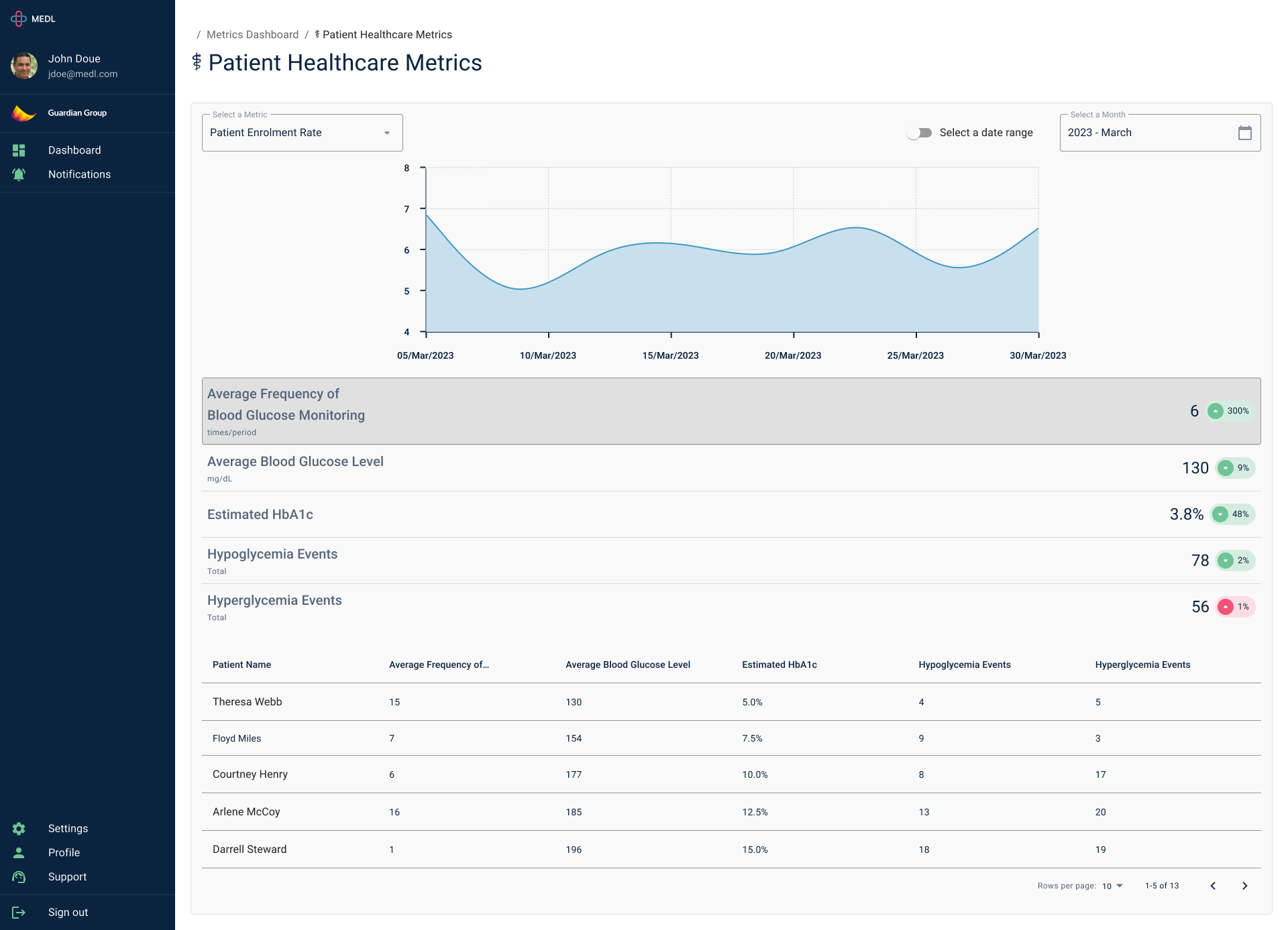
The MEDIC dashboard empowers physicians and endocrinologists with high-density clinical clarity during patient evaluations. At the top sits an executive patient banner with demographic details, estimated HbA1c, and prescription adherence metrics (PDC 88.4%).
The centerpiece is a 14-day glycemic stability curve conforming to international consensus guidelines. Physicians review Time-in-Range percentages across standardized bands (73% in target, 19% high, 5% very high, 2% low, 1% very low) with shaded interquartile ranges.
Directly beneath the curve, an automated Clinical Decision Support (CDS) card highlights recurring patterns (e.g., recurrent afternoon drops post-exercise) and enables 1-click basal insulin titration (e.g., adjusting Lantus from 22u down to 20u qHS), synchronizing changes instantly with the pharmacy and patient app.
Physicians can overlay prescription dose timestamps directly onto the glucose profile, verifying within seconds whether a patient took medication on schedule and how it flattened post-meal spikes.
ACTION: Care Interventionist Workstation & 5-Tier Triage Protocol
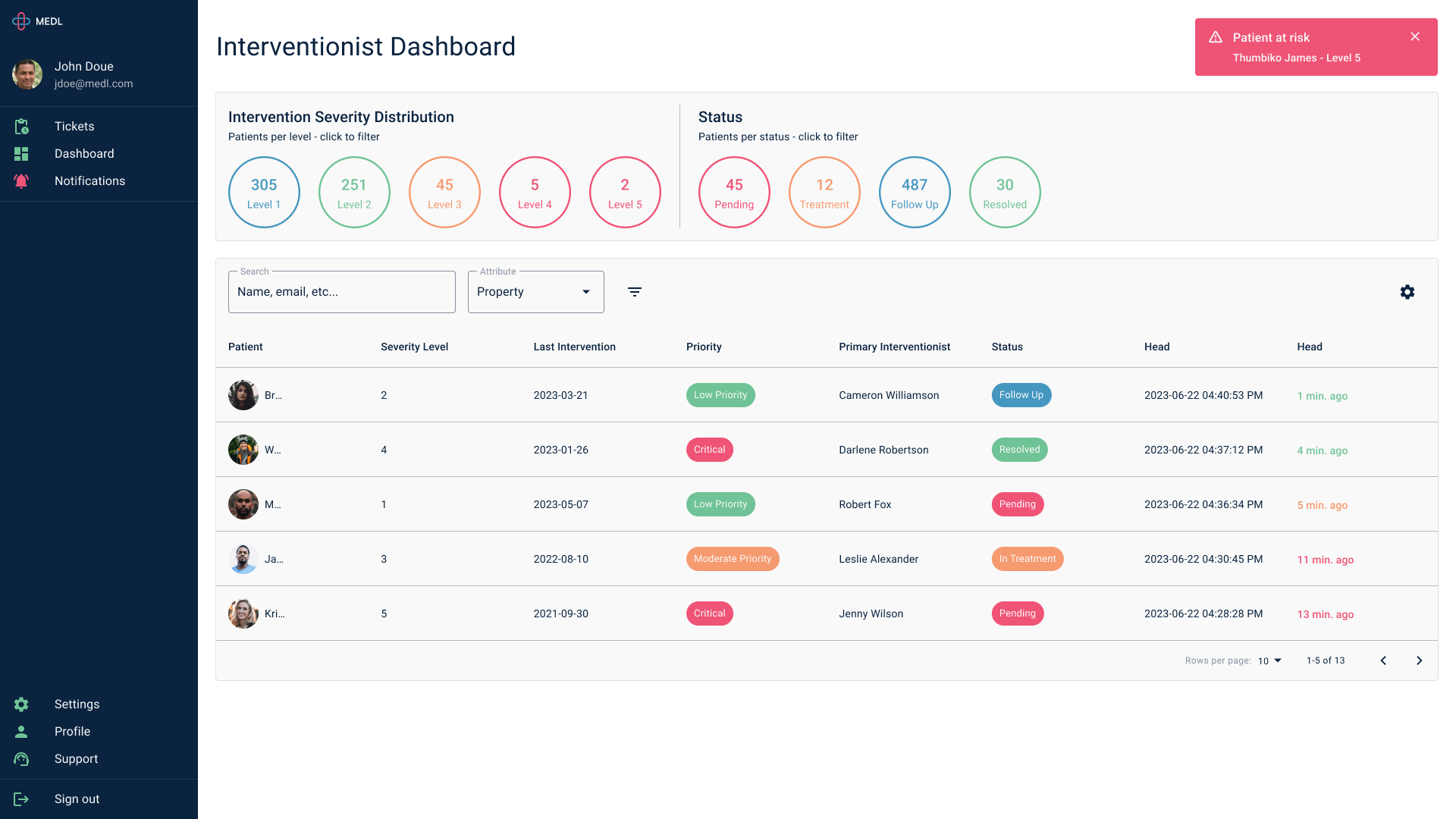
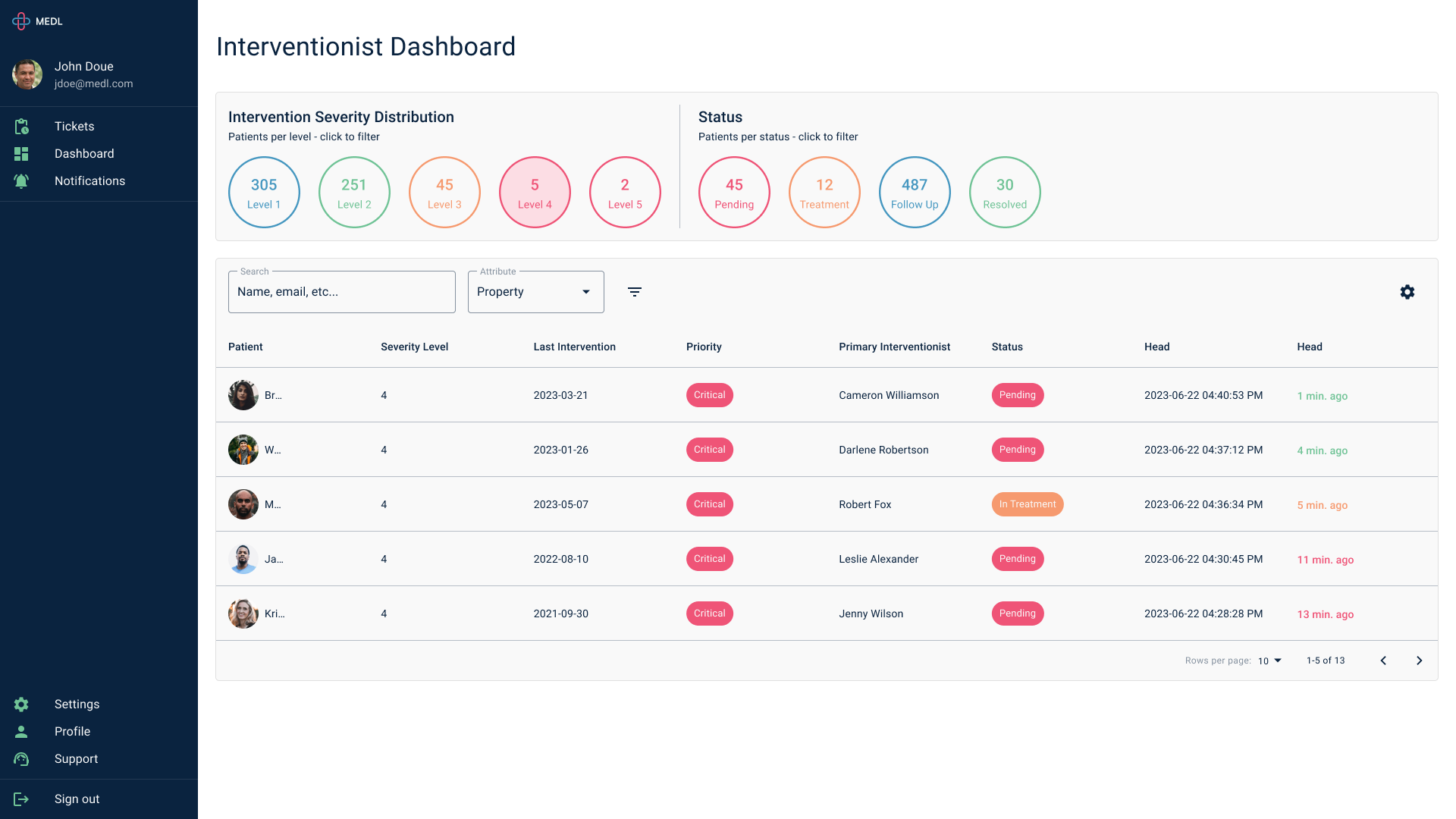
The ACTION dashboard equips frontline care coordinators and triage nurses with an active clinical workstation. Rather than sorting incoming cases chronologically, the queue dynamically prioritizes patients according to our 5-Tier Clinical Intervention Protocol:
- Level 1: Contextual touchpoints and automated routine reminders.
- Level 2: Mild out-of-range excursions triggering automated in-app questionnaires.
- Level 3: Three consecutive excursions requiring scheduled telephone check-ins.
- Level 4: Hyperglycemia spikes (>250 mg/dL) triggering active clinical case management.
- Level 5: Critical acute hypoglycemia (<54 mg/dL) triggering immediate red-flag protocols.
When a Level 5 drop occurs, the screen surfaces a non-dismissible alert with patient vitals, drop velocity (-3.4 mg/dL/min), 1-click telephone triage, and standard 15-15 fast-carbohydrate guidelines.
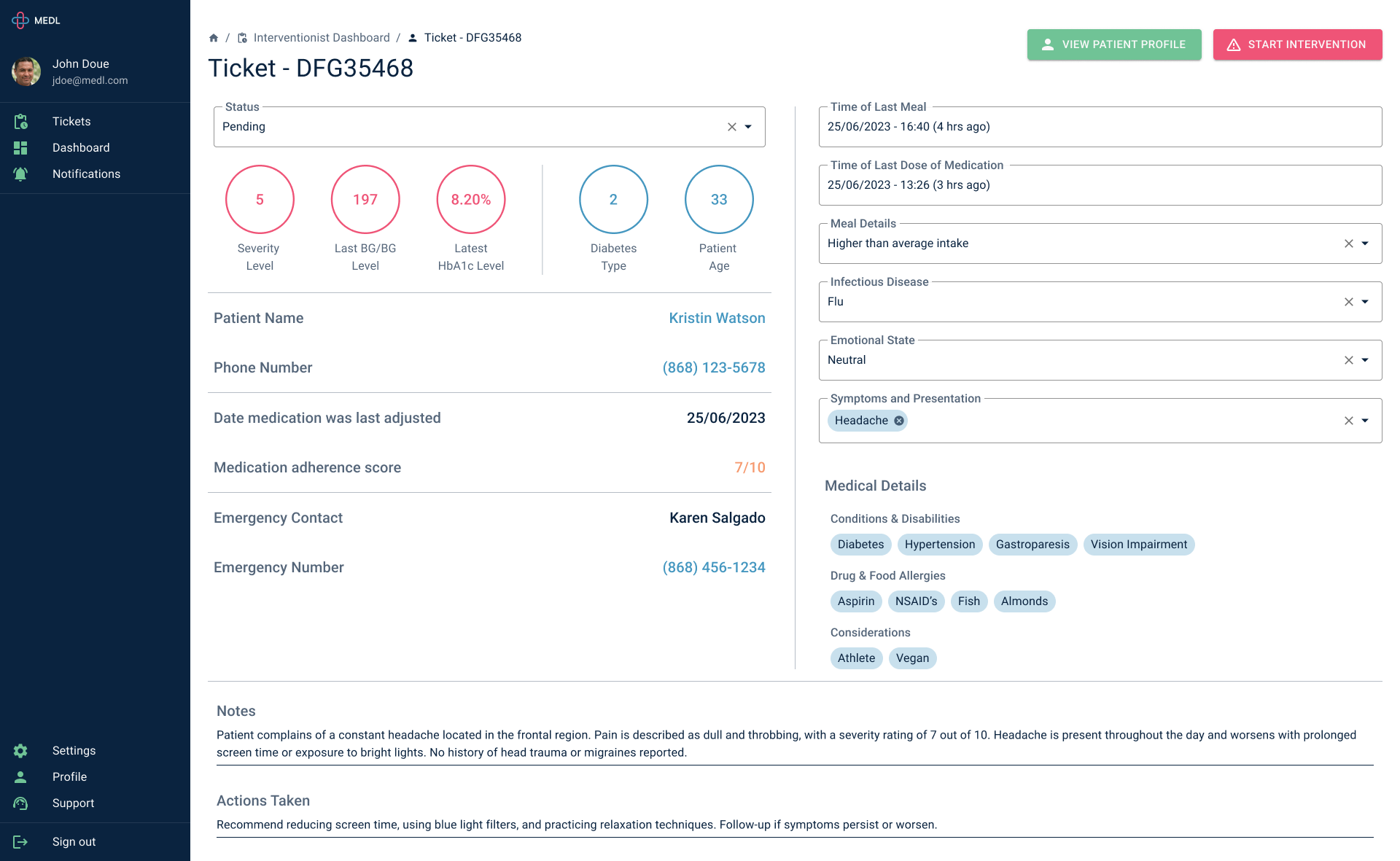
Coordinators can launch one-tap telephone calls directly from the ticket. The system records call timestamps, tracks 15-minute re-test timers, and automatically pings primary caregivers if unacknowledged.
PHARMA: Digital Pharmacy Fulfillment & Role-Based Privacy Shields
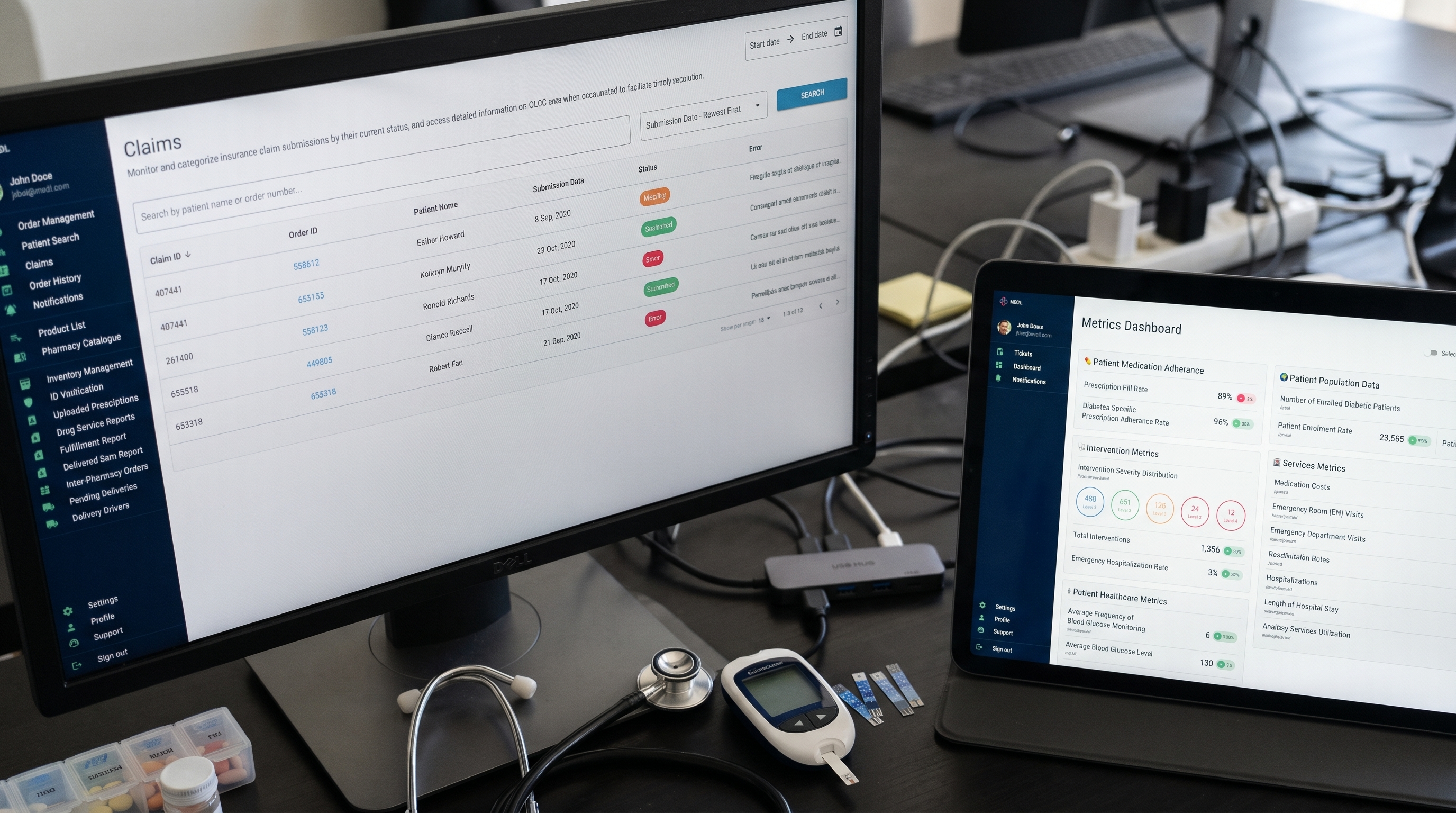
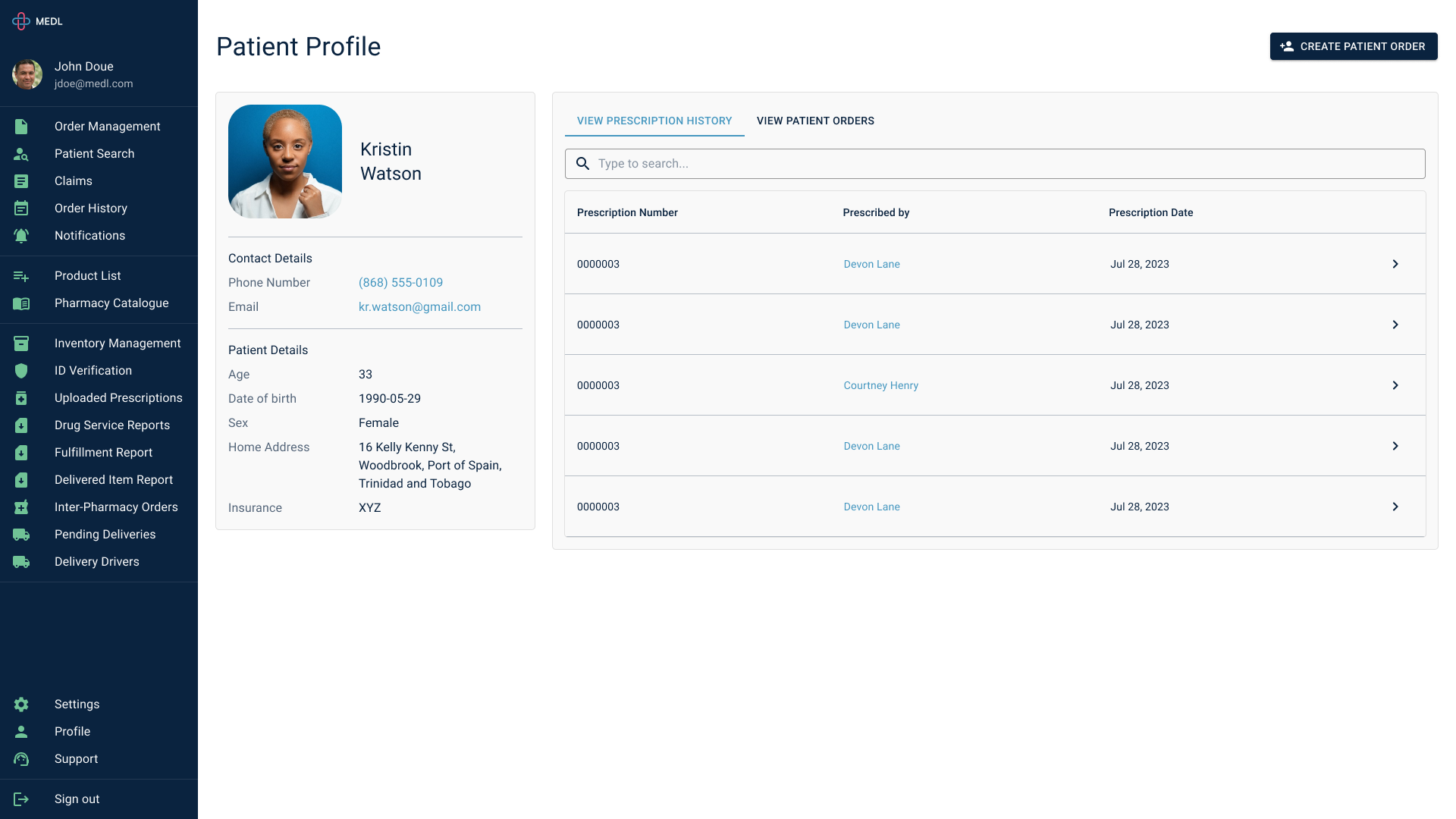
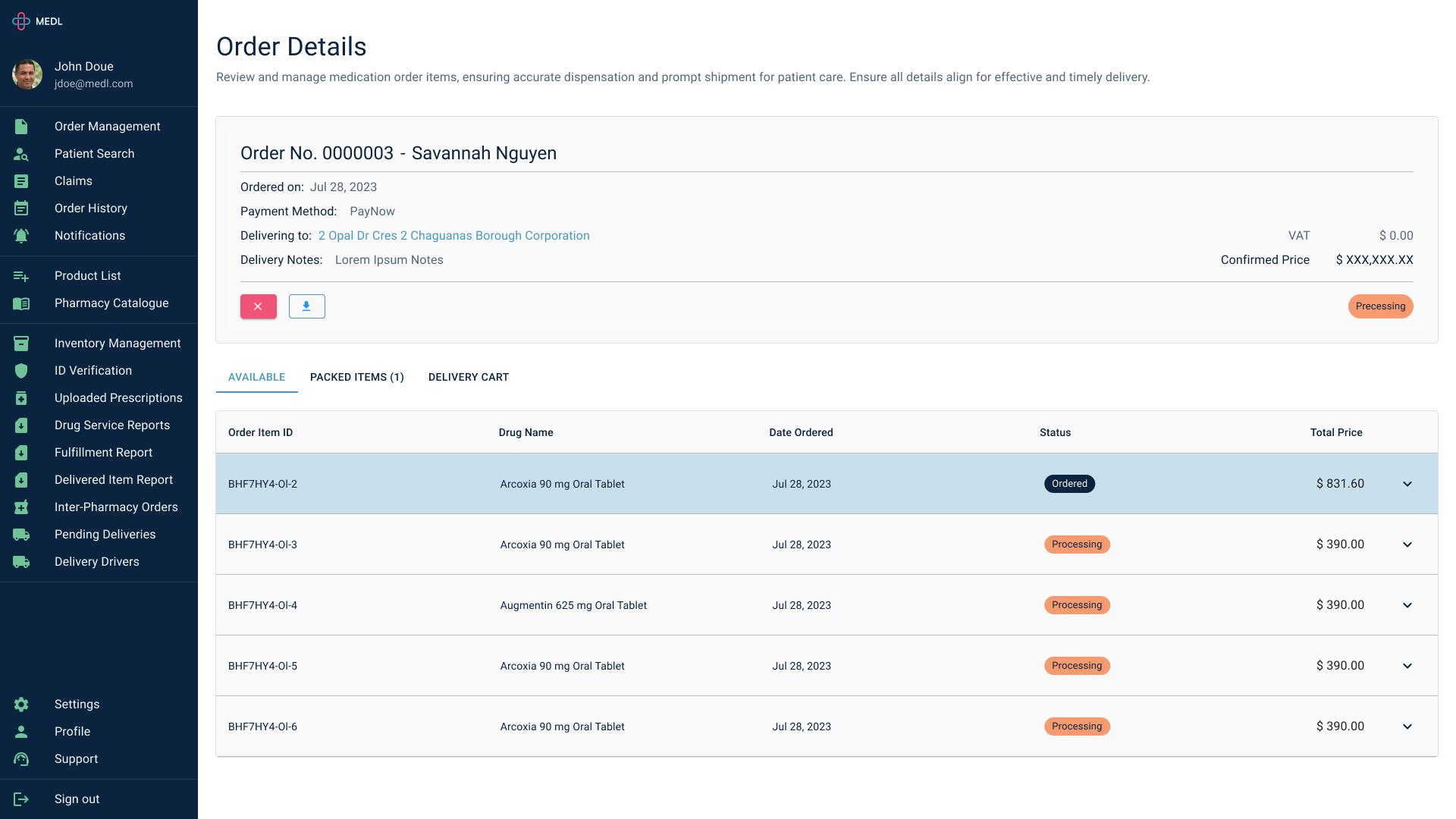
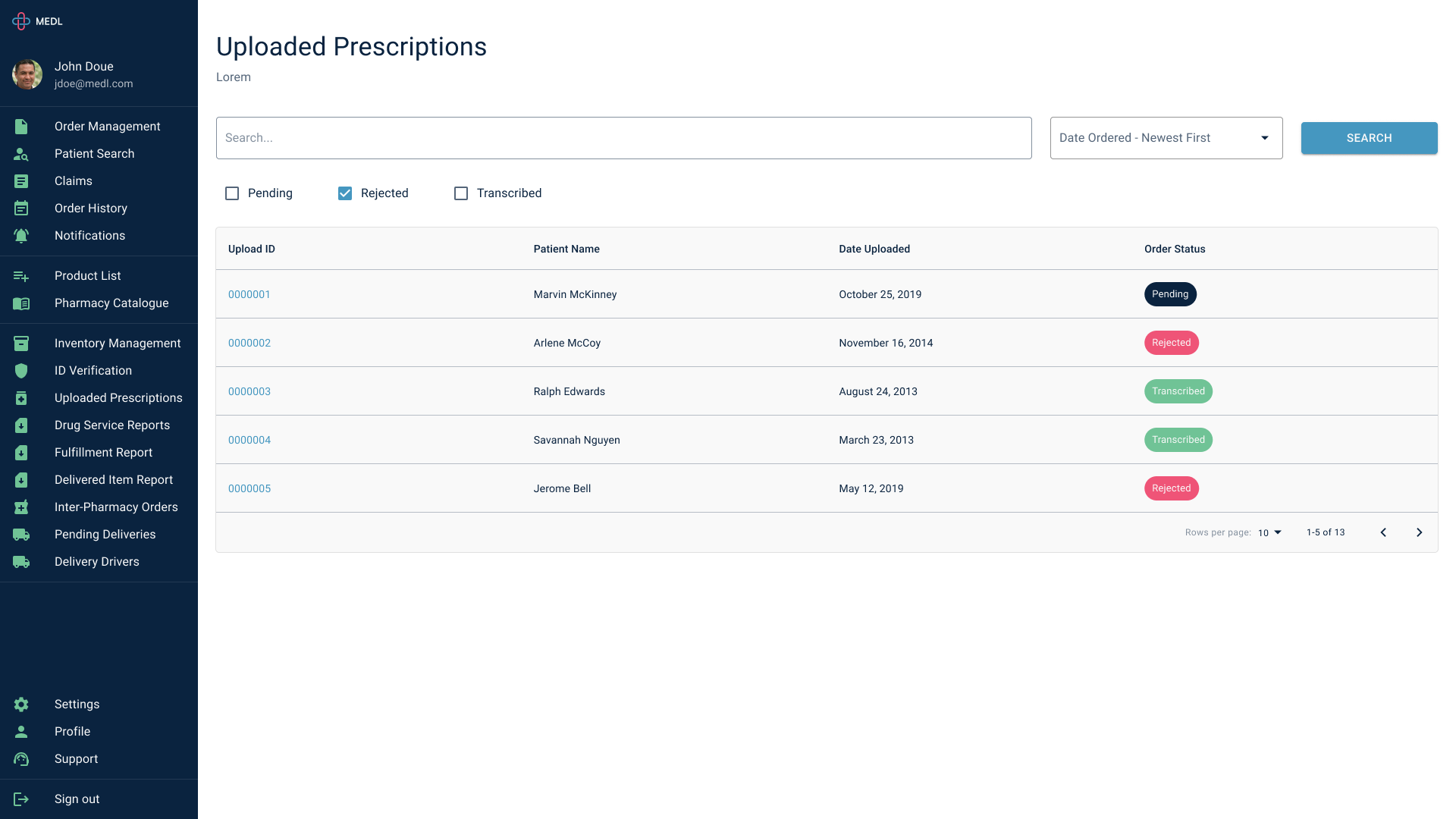
Medl operates its own digital clinical pharmacy, delivering medications and monitoring sensors directly to patients' homes. This dashboard adapts an e-commerce order management flow to medical rigor.
Fulfillment staff verify incoming electronic prescriptions, check NDC inventory buffers, track home shipping logistics, and manage delivery status. The interface incorporates automated drug-interaction warnings and prescription fill rate tracking.
Crucially, the system enforces role-based privacy segregation: fulfillment personnel see only prescription NDCs, dosage, and shipping addresses, while all clinical diagnoses, doctor notes, and raw telemetry remain encrypted and restricted to licensed clinicians.
Role-based encryption tokens protected patient privacy without hindering dispensing pharmacists from verifying drug-drug interactions and coordinating with prescribers.
CALC: Claims & Liability Compass for Health Plans and Investors
The CALC dashboard was designed for Medl's primary enterprise clients and investors: health insurance companies. Insurers fund the program because preventive care keeps diabetic patients healthier, directly lowering the frequency of acute crises and generating smaller, less costly claims.
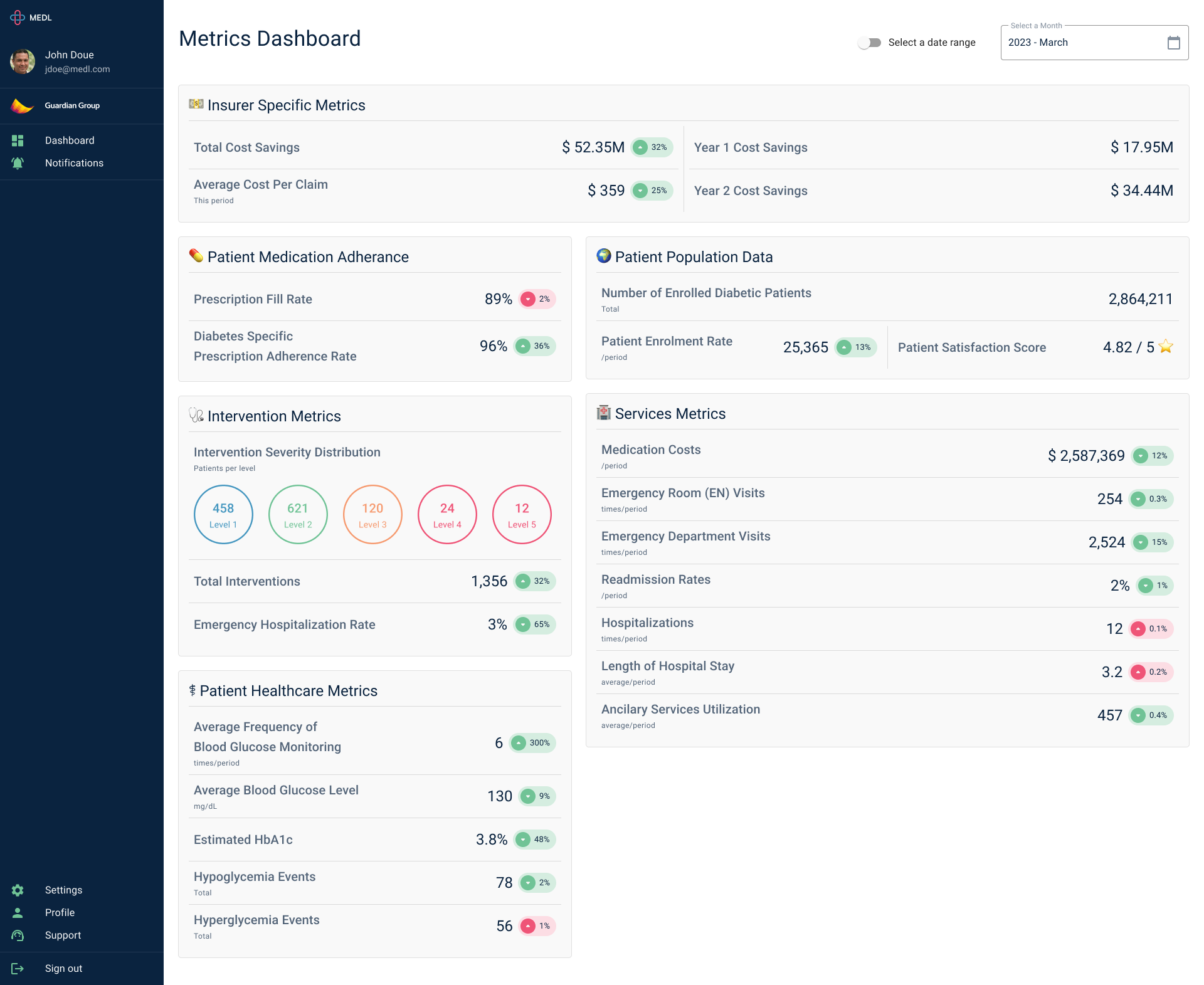
Actuaries track total enrolled lives (14,820 patients), mean HbA1c trajectory (-0.82% reduction across the cohort), and emergency department visit reductions (-51.2% drop). A central 5-tier risk breakdown stratifies the population by glycemic stability: from Level 1 in-target patients (57.5%) down to high-risk Level 5 patients (2.1%).
Actuarial calculation modules quantify net healthcare savings ($124.15 per member per month), proving the preventive care thesis: proactive support avoids expensive inpatient admissions ($14,000 per stay) and shifts spending into low-cost maintenance.
Actuaries can filter cohorts by plan type, commercial vs Medicare Advantage, and longitudinal time windows (3, 6, 12 months) with single-click export into standard healthcare financial formats.
The Closed-Loop Ecosystem: How Everything Connects
The four dashboards do not operate in silos: they communicate in real time to form a synchronized care loop that eliminates handoff delays, maintains medication adherence, and alerts the right provider at the exact moment of need.
Doctor evaluates patient health metrics and treatment efficacy, selecting medications and issuing digital prescriptions directly to the system.
Patient orders via consumer app; Medl pharmacy verifies NDCs, packs medications under role-based privacy masking, and delivers directly to the patient's home.
Patients log daily readings; the 5-tier queue flags out-of-range events, routing check-in surveys, scheduled phone outreach, or acute crisis triage.
Health plan investors track cohort risk migration, PDC medication adherence, and hospital admission reductions, quantifying net claims savings.
User Testing
We evaluated the four dashboards through structured clinical simulations and task-based cognitive walkthroughs with licensed healthcare practitioners across all operational roles.
Conducted two testing phases across 18 healthcare professionals and 120 simulated patient cases to validate usability, speed, and safety.
Methodology & Scope
Clinical Simulation Walkthroughs
Remote think-aloud sessions with 6 endocrinologists, 6 clinical pharmacists, and 6 triage coordinators testing alert identification, prescription verification, and telephone triage workflows.
Participants navigated timed clinical scenarios, including sudden hypoglycemic drops, conflicting medication orders, and multi-cohort actuarial reporting.
High-Volume Queue Stress Testing
Simulated multi-patient triage shifts comparing traditional chronological inboxes against our 5-tier risk-sorted escalation queues under heavy operational loads.
Tracked cognitive workload, error incidence, and time-to-escalation across 120 synthetic patient profiles with variable glycemic volatility.
Key Findings
91% Faster Critical Alert Recognition
Interventionists identified Level 5 hypoglycemic emergencies in 22 seconds on average, compared to 4.2 minutes in unstructured chronological queues.
Pulsing red indicators and dedicated priority tabs eliminated visual scanning friction, ensuring urgent crises were handled immediately.
Zero Misrouted Prescriptions & 96% Satisfaction
Role-based data segregation eliminated fulfillment errors while giving pharmacists instant access to drug interaction warnings and prescribers.
Clinicians reported a 96% satisfaction rating, noting that the integrated AGP curve and 1-click titration controls made consultations significantly more focused.
Iteration
1. 5-Tier Color & Urgency Hierarchies vs. Monolithic Alerts
Early prototypes displayed all out-of-range readings with standard amber warning tags. In usability tests, coordinators reported severe notification fatigue, often skimming past critical 50 mg/dL crashes because they looked identical to routine 190 mg/dL post-meal excursions. We rebuilt the alert engine into five distinct color and motion tiers, reserving high-contrast red banners and audio pings strictly for Level 5 acute crashes.
Suppressing non-urgent notifications for Levels 1 and 2 cut provider notification volume by 68%, restoring urgent responsiveness for acute emergencies.
2. 1-Click Ticket Actions vs. Multi-Step Administrative Friction
Initial triage tickets required coordinators to open three separate modals to document a phone call, log patient symptoms, and schedule a 15-minute follow-up. This process took nearly 3 minutes of administrative typing per call. We consolidated the workflow into an inline action bar with quick-tap outcome chips ('Patient Conscious', 'Fast-Carbs Taken', 'Re-Test Scheduled'), reducing logging time to 15 seconds.
Automated EHR timestamping and background caregiver SMS dispatch eliminated manual documentation steps during high-stress triage calls.
3. Role-Based Privacy View for Fulfillment Operations
Early pharmacy fulfillment screens displayed full patient medical histories alongside medication dispensing queues. Clinical leadership flagged this as unnecessary data exposure. We redesigned the pharmacy interface to use tokenized patient identifiers, masking clinical notes and raw telemetry while preserving necessary prescription NDC, dosage, and allergy details.
Role-based data shields protected patient privacy without hindering dispensing pharmacists from verifying drug-drug interactions.
4. Longitudinal Health Trend Overlays vs. Isolated Readings
Early physician screens showed glucose curves in isolation from medication history. Doctors had to switch back and forth between pharmacy fill logs and charts to guess whether an evening spike was caused by missed medication or poor meal choices. We added interactive event markers directly on the curve, indicating verified dose timestamps, meal tags, and medication delivery dates.
Overlaying dose confirmations directly on the health curve enabled physicians to assess medication efficacy within seconds of opening a patient file.
Impact
We tied our interface architecture directly to clinical endpoints and health economics across 14,820 enrolled patients, 42 participating clinics, and 3 regional health systems.
Over a 6-month retrospective evaluation with longitudinal Electronic Health Record (EHR) integrations, we audited prescription fill logs, clinical telemetry, and emergency room admission rates across enrolled cohorts.
By connecting primary care physicians, triage interventionists, pharmacy operations, and health plan actuaries into a unified data ecosystem, we proved that clinical design eliminates communication silos and directly lowers acute healthcare costs.
Clinical Trial Endpoints & Health Economics
6-Month Retrospective Pilot • 42 Clinics & 3 Regional Health Networks
Longitudinal audit data across 42 partner clinics verified that lifting medication adherence, providing real-time alert triage, and streamlining physician titration delivered measurable reductions in acute healthcare utilization.
Leadership & Expertise
Leadership
Multi-Stakeholder Healthcare Alignment
Facilitated weekly alignment sessions bridging physicians, triage nurses, pharmacy operations, and health plan actuaries to establish shared clinical definitions and risk thresholds.
Maintained real-time data integrity dashboards tracking PDC lift, active daily logins, and clinical escalation velocity for executive reviews.
Design System Governance & Efficiency
Architected a unified web and mobile Figma design system with 60+ responsive components and accessible tokens, accelerating feature delivery cycles by 71%.
Built tokenized component libraries that synchronized developer handoffs across web dashboards and native mobile applications.
Engineering Standards & Defect Reduction
Standardized JIRA ticket templates pairing interactive prototypes with edge-case specifications, reducing frontend implementation bugs by 63%.
Established rigorous design QA acceptance criteria and empty-state guidelines, eliminating edge-case regression cycles.
Expertise
Multi-Sided Healthcare Systems Architecture
Specialized in connecting multi-sided healthcare platforms: harmonizing prescribers, care coordinators, pharmacy fulfillment, and health insurance payers into unified workflows.
Designed synchronized multi-portal architectures linking doctors, pharmacists, triage staff, and actuarial auditors in real time.
Clinical Decision Support (CDS) & Provider UX
Designed high-density clinical views translating longitudinal health metrics into actionable therapy titration and e-prescribing workflows.
Created standardized glycemic stability curves with shaded interquartile bands and integrated therapy recommendation logic.
Regulated Medical Devices & SaMD Compliance
Applied FDA Software as a Medical Device risk classifications and human factors usability engineering standards to provider-facing clinical interfaces.
Engineered deterministic fallback pathways and clear clinical labeling adhering strictly to FDA Class II CDS guidelines.
Role-Based Privacy & Healthcare Data Boundaries
Designed role-based permission architectures that tokenized patient identities and protected clinical diagnoses from non-clinical fulfillment personnel.
Ensured zero Protected Health Information leaks across fulfillment databases while maintaining instant access for licensed triage staff.
Preventive Care Economics & Payer ROI
Mapped user interface micro-interactions directly to clinical quality measures: PDC proportion of days covered, HEDIS measures, and insurer claims reduction.
Proved that interface design directly influenced patient medication persistence, delivering verified enterprise payer savings.
Looking to build reliable healthcare and enterprise data systems?
Let's collaborate on complex domains where clinical safety, high data density, and systems architecture are paramount. Explore more of my work or connect directly.
Available for end-to-end UX leadership, healthcare provider platform design, and complex design systems architecture across medtech and enterprise platforms.